Blog Detail
How to Do Navratri Durga Mata Darshan in Varanasi
How to Do Navratri Durga Mata Darshan in Varanasi
Navratri is celebrated across India, but Varanasi does it differently. This is a city built on faith, ancient temples lined up shoulder to shoulder, steeped in ritual. Kashi is Shiva's city, everyone knows that. But when Navratri comes, it pivots almost entirely toward the Goddess.
The devotion was always there, just quieter. But during these nine days, it surfaces completely. The lanes around the Durga temples fill fast. Bells barely stop ringing. The air turns thick with incense and marigolds. If you've ever wanted to witness Durga Mata's darshan the old way, unpolished, unhurried, straight from the heart, Varanasi is where you go.
How is Navratri Celebrated in Varanasi?
Normally, Navratri is celebrated with Garba in most places. But Varanasi has the Navadurga Yatra. A tradition passed down for generations. Local belief holds that Kashi itself is watched over by nine temples, each home to a different form of the Goddess.
So the nine days become a walking pilgrimage. One temple per morning, one avatar per day. Day one belongs to Maa Shailputri, day two to Maa Brahmacharini, and so on through all nine forms. The narrow lanes near the ghats fill with chanting, flower sellers pile their carts high with marigolds. Once evening arrives, the pandals light up and the streets shift register entirely.
Top 5 Temples to Visit During Navratri in Varanasi
Ideally, you'd cover all nine temples of the Navadurga circuit. If the schedule is tight, these five matter most.
1. Maa Kushmanda Temple (Durga Kund Mandir)
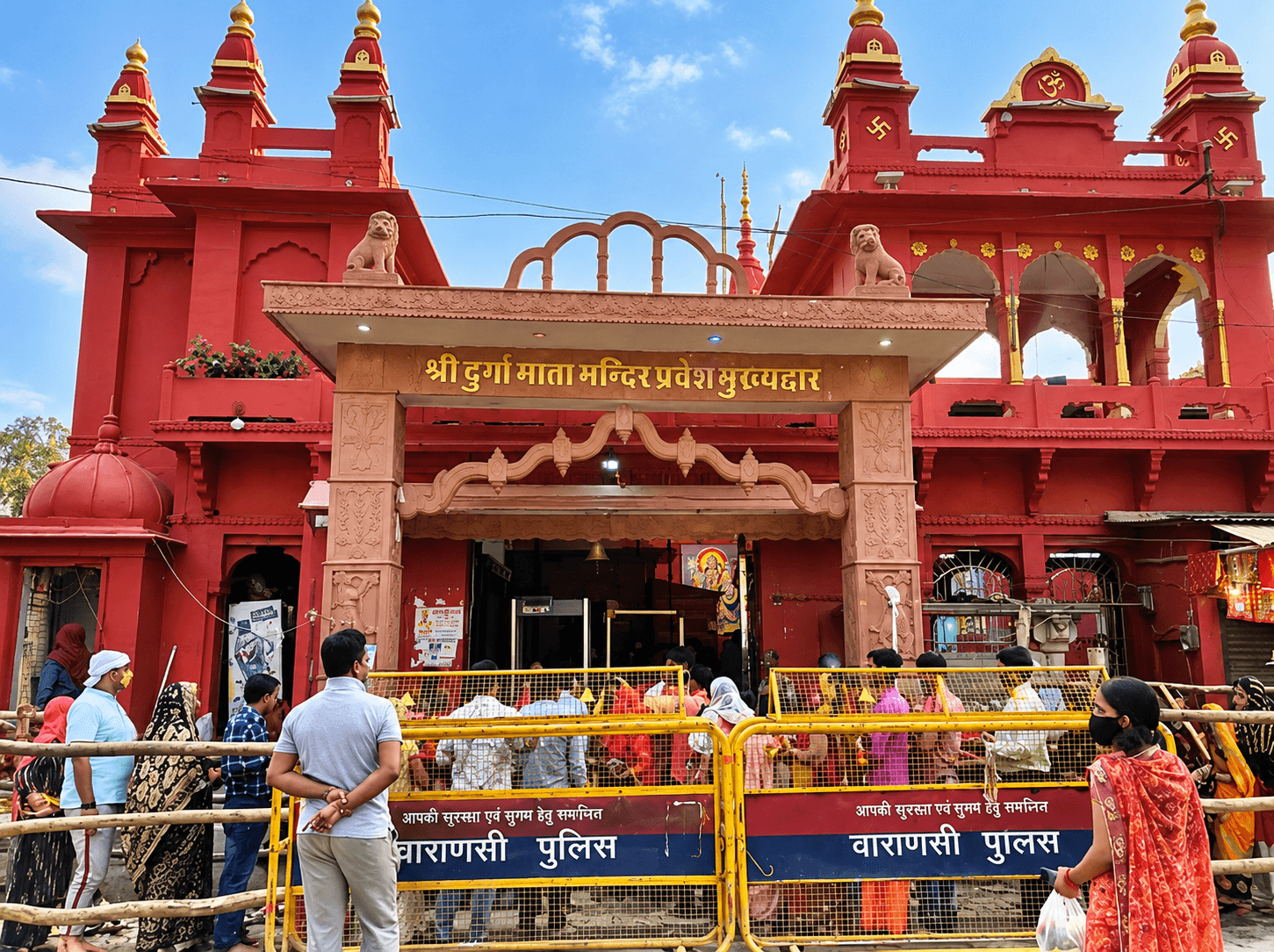
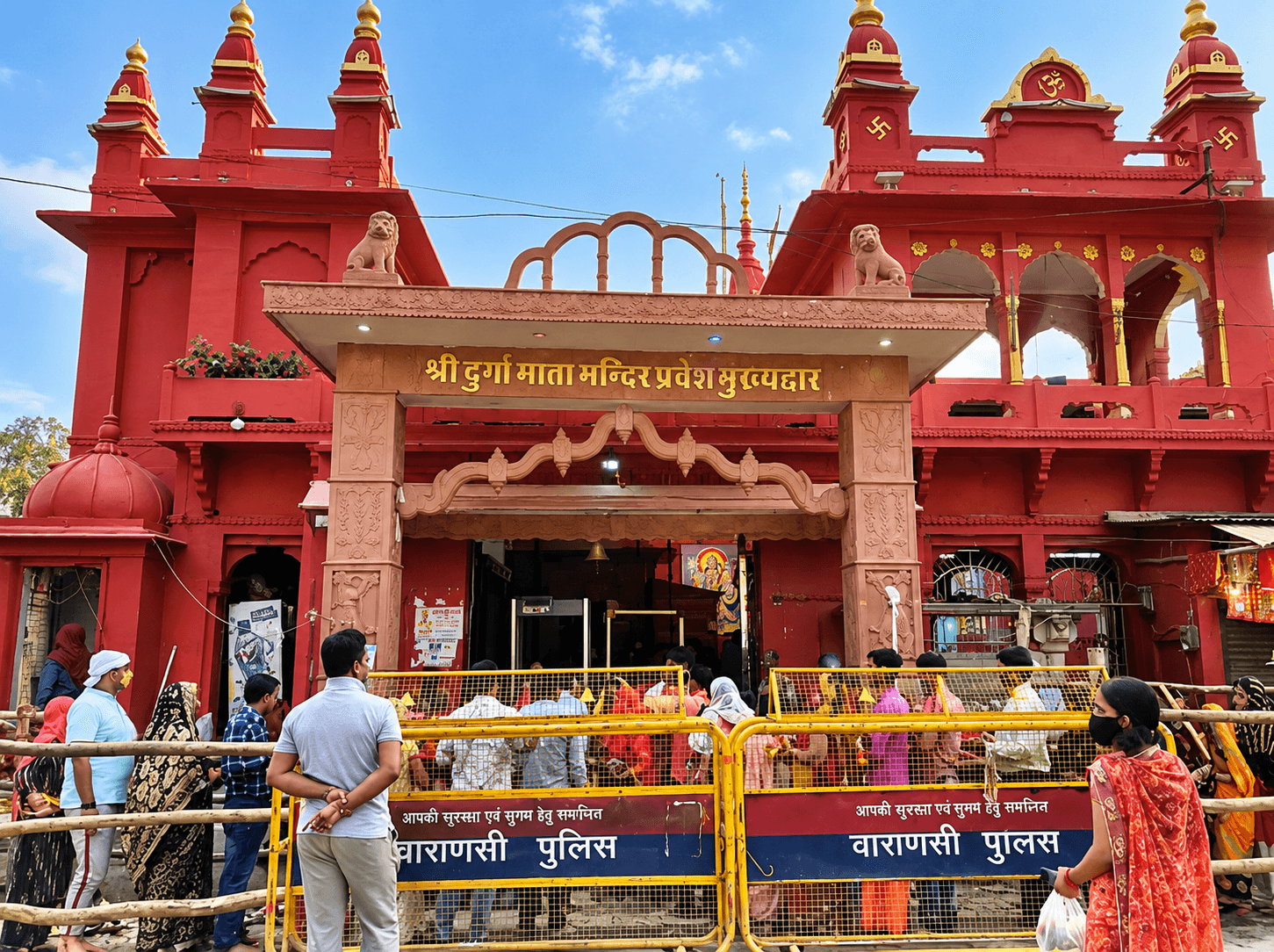
This is where Navratri’s energy concentrates. Kushmanda is the fourth form of Durga, and this bright red, 18th-century temple set beside its own historic pond becomes the hub of the entire celebration.
Timings: 5:00 AM - 11:00 PM
Address: Durgakund Road, Jawahar Nagar, Naria
2. Maa Shailputri Temple
Day 1 starts here. Shailputri, daughter of the Himalayas, the first form of Durga. Beginning the nine days at this temple is considered especially auspicious. The morning crowd here has a specific quality of collective intention that the later days don’t quite replicate.
Timings: 5:00 AM - 10:00 PM
Address: Marhia Ghat, Jalalipura
3. Maa Annapurna Mandir (Maa Mahagauri)
In Kashi, Goddess Annapurna is worshipped as Mahagauri, the eighth form of Durga. The temple sits inside the Kashi Vishwanath corridor. It briefly closes in the afternoon for bhog, so note the timing before you go rather than after you’ve walked there.
Timings: 4:00 AM - 10:30 PM
Address: Kashi Vishwanath Gali, Vishwanath Gali
4. Maa Brahmacharini Temple
Day 2. The ascetic, meditative form of the Goddess and the temple reflects that. Calmer than most, with views out over the Ganges that give the visit a quality the busier temples don’t.
Timings: 5:00 AM - 9:00 PM
Address: Ghasi Tola, near Panchganga Ghat
5. Maa Vishalakshi Temple
One of India's Shakti Peethas. Legend holds that the Goddess's earrings fell here. Thousands of pilgrims during Durga Puja, and the atmosphere alone, even without the crowds, earns the walk to Mir Ghat.
Timings: 5:00 AM - 9:00 PM
Address: Mir Ghat, Vishwanath Gali
Things to do in Varanasi during Navratri
- Complete the Navadurga Yatra
Follow the old Kashi route, one temple per day, one form of the Goddess at a time, from Maa Shailputri on Day 1 to Maa Siddhidatri on Day 9. A pilgrimage in the truest sense. Not symbolic. Actual.
- Catch the Evening Ganga Aarti
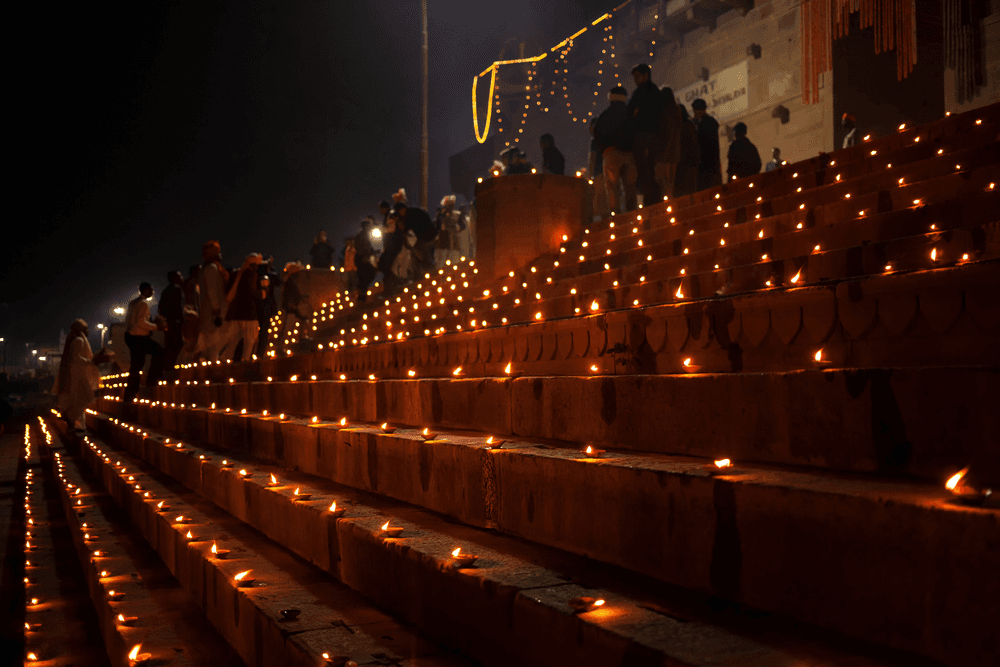
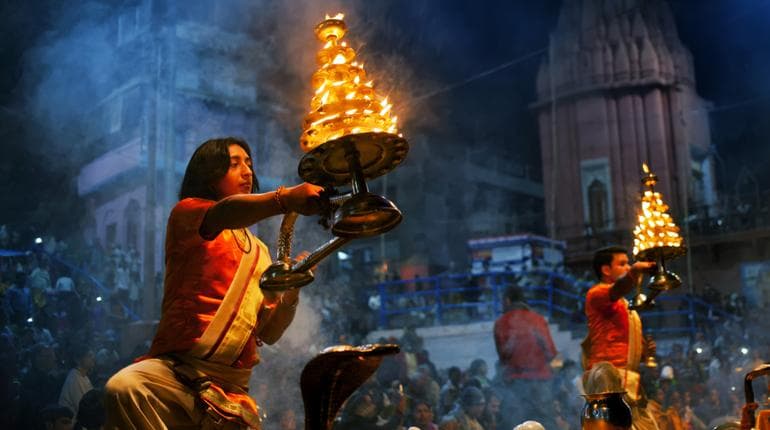
Get to Dashashwamedh Ghat around sunset. Priests move in perfect sync, huge brass lamps, incense smoke, Vedic chants rolling over the crowd. The kind of thing you stop trying to photograph after a while and just watch.
- Go Pandal Hopping
Walk the evening. The city's Durga Puja pandals come alive after dark, elaborate lighting, hand-crafted idols, and the specific neighborhood pride that goes into every installation.
- Watch the Ramnagar Ramlila in Varanasi
Take a boat across. The world's oldest continuous open-air staging of the Ramayana, a full month, no microphones, no loudspeakers, gas lanterns and the traditional text performed exactly as it has been for centuries.
- Try the Navratri Vrat Food
Wander the lanes. Sabudana khichdi, kuttu ki puri, a cold Banarasi lassi with rabri on top. The small shops tucked off the main lane usually make the better versions, follow the smell rather than the signage.
A Few Things to Know Before You Go
Get there early, 5:30 AM for the Mangala Aarti. The crowd is thin at that hour and the atmosphere is completely different from mid-morning. Ashtami and Navami are when the lines get serious, so if you're going on those days, early isn’t a preference, it’s a plan.
Dress modestly, these are working temples, not heritage sites. Leave the camera where it is, phones and cameras aren’t allowed inside the main shrines. Watch the monkeys around the temple grounds, they've learned to read body language and bags with equal accuracy.
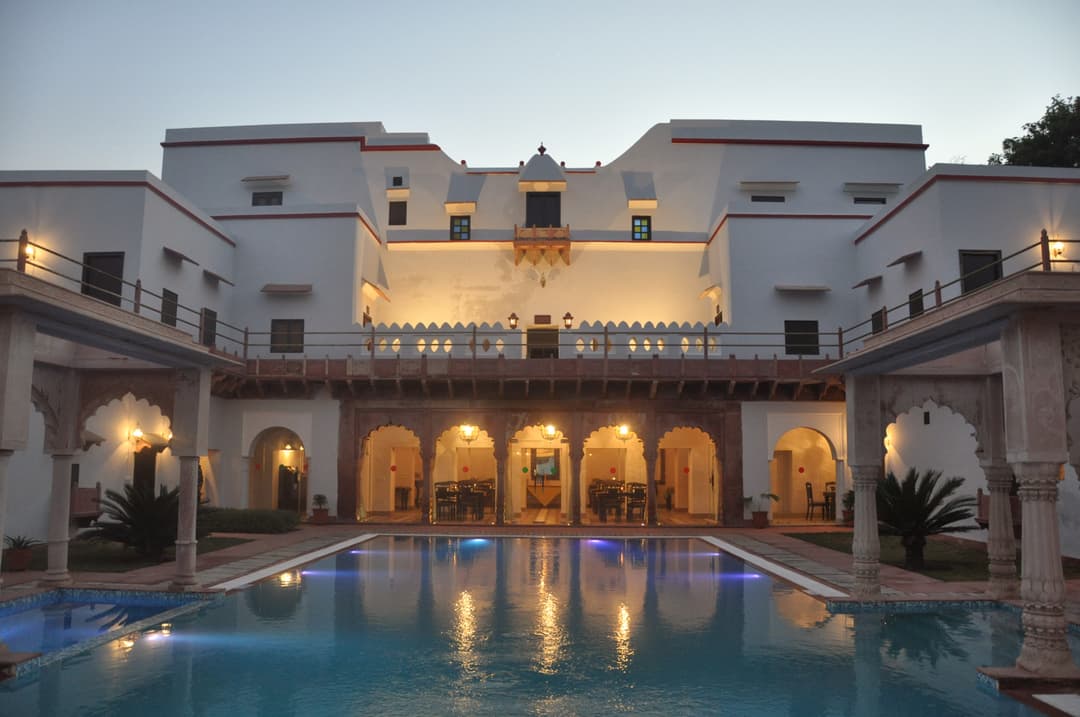
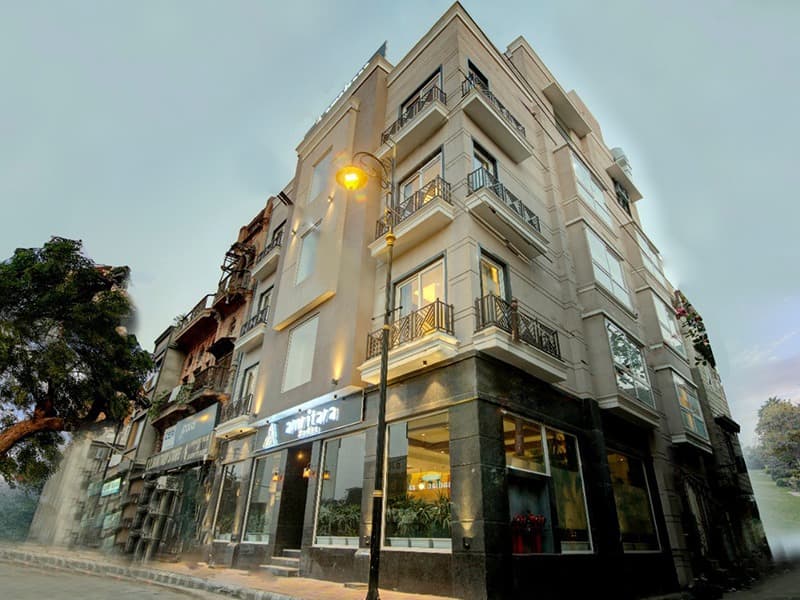
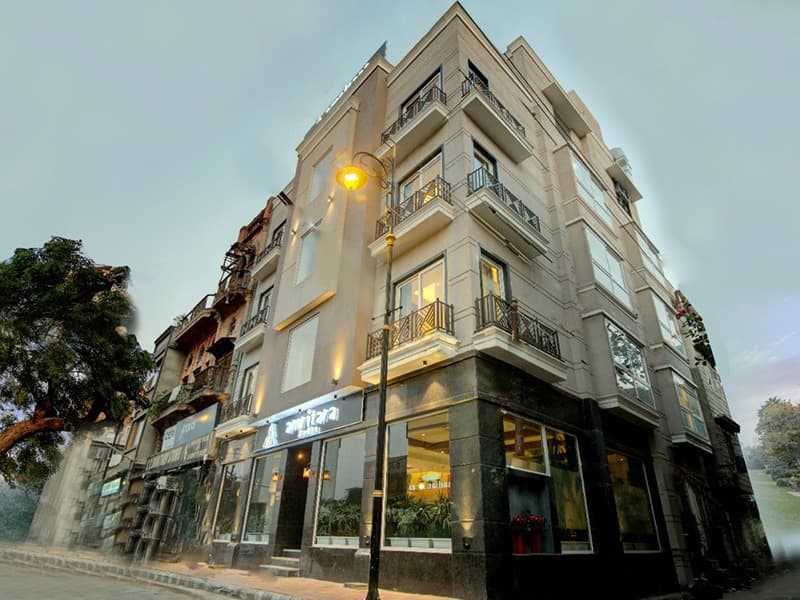
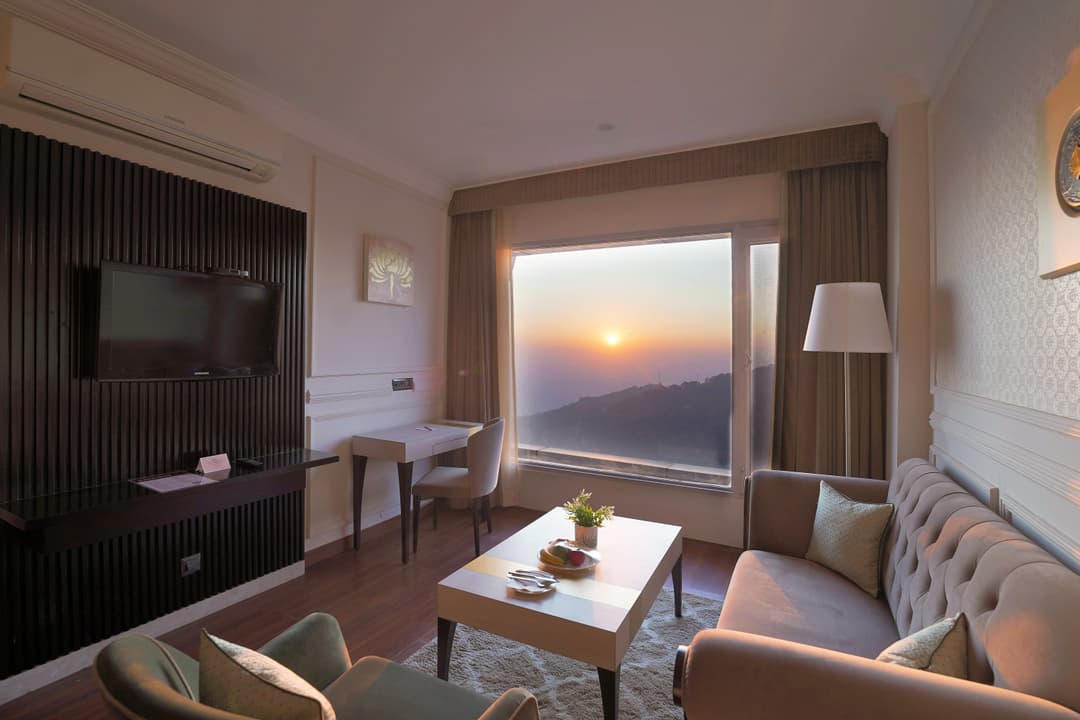
Carry cash for prasad, flowers and donations. And if you want to the early Mangala Aarti without a frantic cross-city commute at 4:30 AM, staying near the ghats changes the morning entirely. Amritara The Samagam is a good option if the proximity to the temples matters more than being in the main tourist zone.
A lot of visitors pair the Durga Kund visit with morning boat ride on the ghats. Both are slow, early, quiet. Back to back, they’re probably the best two hours the Varanasi trip produces.
Find Amritara The Samagam on Google Maps
FAQS
1. Can you visit all 9 Navadurga temples in a single day?
Yes, if you start around 4:30 AM and hire a local auto-rickshaw or guide who knows the lane shortcuts, all nine are doable. That said, the traditional pace is one per day, and there's something to that rhythm that the single-day sprint doesn't replicate.
2. Is there a dress code for the temples?
Nothing written down. Sarees, salwar suits, kurta-pajamas, that's what most people wear. Shorts and sleeveless near the sanctums aren't a good idea. It's about reading the room, not following a rule.
3. Why is Navratri in Varanasi so famous?
Because it isn't garba nights and it isn't a single big pandal. It's an ancient walking pilgrimage through a city that treats nine different temples as nine different presences, each one distinct, each one with its own history. That specificity is what makes it different from everywhere else.
4. Which Durga temple is Varanasi best known for?
Durga Kund Temple. The one beside the pond, the one that fills fastest during Navratri. The 18th-century structure, the red walls, the sheer volume of devotees, it's the one the city returns to as the centre of the nine-day celebration.
5. Which month is best to visit Varanasi?
November. The temperatures are where they should be, 15°C to 30°C, comfortable without the pre-monsoon heat or the winter cold. Dev Deepawali falls in November too, which makes it the month where the Ganga and the city are simultaneously at their best.